Finished basement under water in Aurora? Snowmelt seeps through slab seams and sump pumps fail during summer storms. Elite Guardian Mitigation is local and IICRC-standard, on site in about an hour to extract, dry, and restore.

Crews measure moisture, identify the source, and deploy pumps and wet vacuums to remove standing water from the basement slab, subfloor, and any low mechanical areas.
Saturated carpet, pad, lower drywall, and wet insulation are removed and documented. Crews treat framing with antimicrobial to stop mold before it starts.
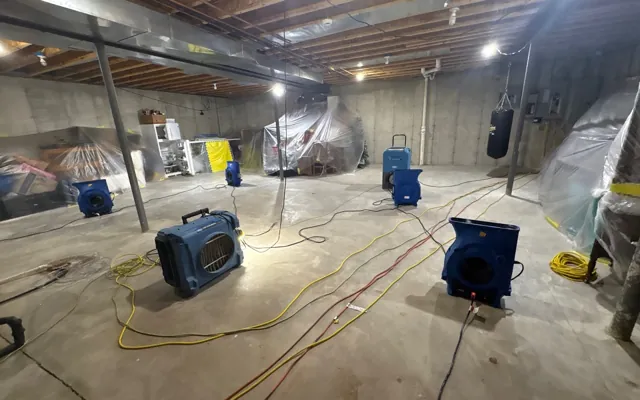
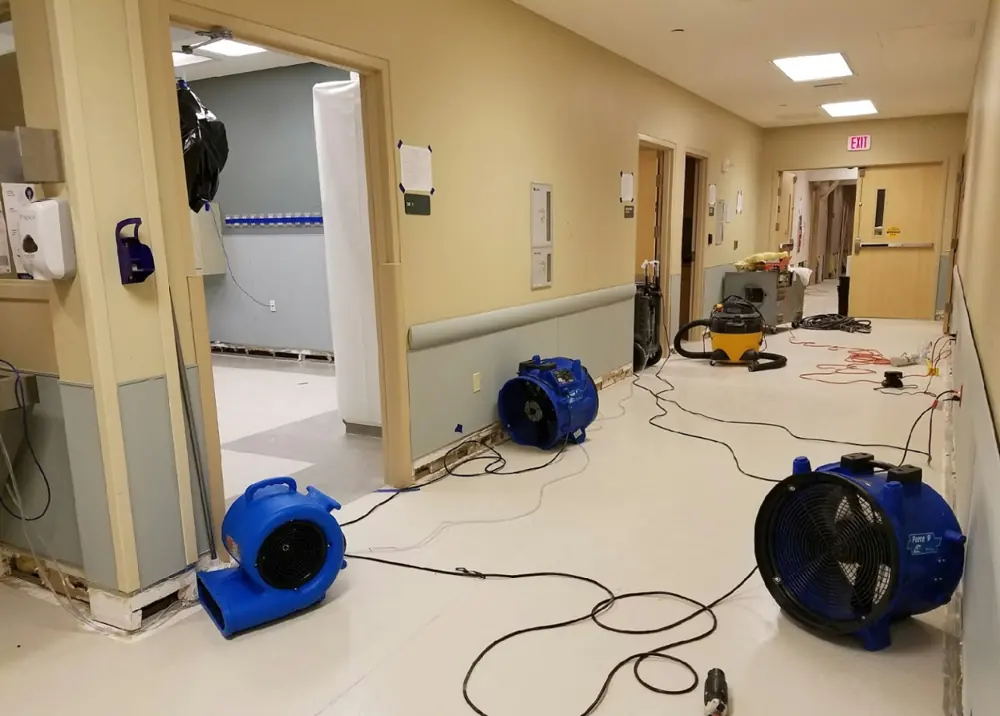
Air movers and commercial dehumidifiers dry the slab, framing, and wall cavities. Crews log moisture daily until every material meets a dry, stable standard.
Crews rebuild with new drywall, flooring, and paint, and can add or upgrade a sump pump with battery backup to protect against the next storm.

While help is on the way, these first steps, done only where it is safe, limit the damage and protect the insurance claim.
Shut the supply off at the source, or close the home's main valve if the source is not obvious. Stopping the flow limits the damage more than anything else.
Switch off electricity to the affected area, but only if the breaker can be reached without standing in or touching the water.
Get a crew dispatched right away. The sooner extraction and drying begin, the more flooring, drywall, and belongings can be saved.
Take photos and a short video of the water and the affected rooms before anything is moved, so the insurance claim starts strong.
Basement flood cleanup in Aurora typically runs $2,000 to $8,000, depending on water volume, how long it sat, the size of the finished space, and how much drywall and flooring must be replaced. Adding a battery-backup sump pump runs about $1,200 to $2,500. Homeowner insurance usually covers sudden losses from sump failure, burst pipes, and storms, and crews coordinate the claim directly with your adjuster.
Crews reach Aurora and the south-metro Front Range fast, from Del Mar and Aurora Hills to Village East, Smoky Hill, Mission Viejo, and Tallyn's Reach. See the full list on the areas served across Aurora page.
See all areas servedEvery loss is photographed, measured, and logged from the first visit, so the paperwork holds up with your insurance carrier.
Technicians follow recognized IICRC drying standards and prove the work with daily moisture readings, not guesswork.
Emergency dispatch any hour of the day or night, with a real crew on the way, not a callback in the morning.
A real crew dispatched any hour, not a callback in the morning.
Trained technicians following recognized IICRC drying standards.
Truck-mounted, portable, and submersible for any size loss.
The loss is documented and billed to the carrier directly.
Most basements dry in five to ten days when water is removed quickly. Slab, framing, and subfloor hold moisture that must evaporate under controlled airflow. Crews run dehumidifiers and air movers continuously and check moisture meters daily until readings reach a safe, stable level.
Mold can start within 24 to 48 hours if moisture stays. Fast extraction and continuous drying are the best defense. If mold has already appeared, crews treat surfaces with antimicrobial and keep air moving so it does not spread while crews finish drying the structure.
Standard homeowner policies usually cover sudden losses like burst pipes, sump pump failure, and storm intrusion, minus your deductible. Gradual seepage from neglected grading or gutters is often excluded. Crews document the cause and damage in detail and coordinate directly with your adjuster.
Yes. Even an unfinished Aurora basement collects moisture that can weaken framing and feed mold. A working sump pump with battery backup protects the slab and stored items, and it is cheap insurance against the summer downpours that overwhelm drainage on the Front Range.
Clean gutters, extend downspouts at least six feet from the foundation, and grade soil to slope away from the house. Test your sump pump before storm season and add a battery backup. Sealing slab and wall cracks also slows seepage during heavy snowmelt and rain.
Aurora crews are on call 24 hours a day, local and fast, and can be on the way within the hour.
Call (720) 807-8182