Roof-mounted swamp coolers are common on the Front Range, and when one leaks it sends water straight through your ceiling. Elite Guardian Mitigation responds across Aurora in about an hour, with IICRC-standard crews to dry it fast.

Crews shut off the cooler's water line, inspect the attic and ceiling, and use moisture meters and thermal imaging to trace how far water has spread from the roof unit down.
Crews remove standing water, pull saturated attic insulation, and take out ceiling drywall that has bulged or stained so the cavity above can be reached and dried.
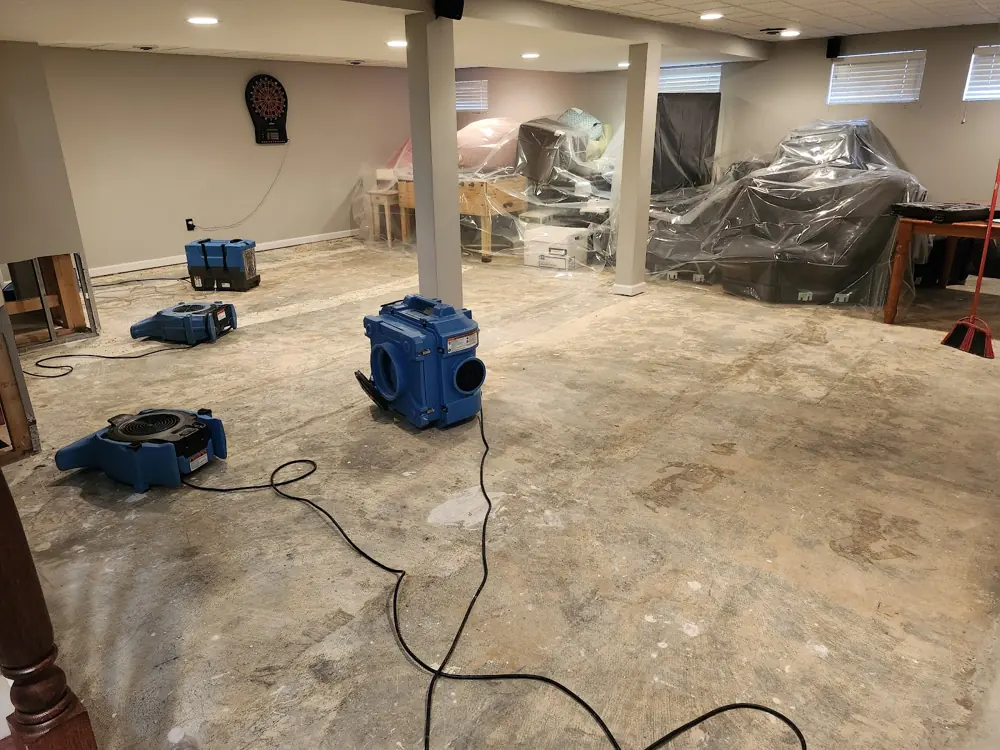
Air movers and dehumidifiers dry the attic, framing, and ceiling. Crews track moisture daily and keep equipment running until every reading meets IICRC dry standards.
Crews replace insulation and drywall, repaint the ceiling, and coordinate the cooler repair or seasonal shutdown so the fixed unit will not leak again next summer.

While help is on the way, these first steps, done only where it is safe, limit the damage and protect the insurance claim.
Shut the supply off at the source, or close the home's main valve if the source is not obvious. Stopping the flow limits the damage more than anything else.
Switch off electricity to the affected area, but only if the breaker can be reached without standing in or touching the water.
Get a crew dispatched right away. The sooner extraction and drying begin, the more flooring, drywall, and belongings can be saved.
Take photos and a short video of the water and the affected rooms before anything is moved, so the insurance claim starts strong.
Swamp cooler leak cleanups in Aurora typically run $1,200 to $5,000. The cost depends on how long the cooler leaked, whether the attic insulation and roof decking got soaked, and how much ceiling drywall must be replaced. A sudden failure is often covered by homeowner's insurance, while a cooler left leaking all season may be treated as maintenance. Crews document the cause and bill your adjuster directly.
Crews reach Aurora and the south-metro Front Range fast, from Del Mar and Aurora Hills to Village East, Smoky Hill, Mission Viejo, and Tallyn's Reach. See the full list on the areas served across Aurora page.
See all areas servedEvery loss is photographed, measured, and logged from the first visit, so the paperwork holds up with your insurance carrier.
Technicians follow recognized IICRC drying standards and prove the work with daily moisture readings, not guesswork.
Emergency dispatch any hour of the day or night, with a real crew on the way, not a callback in the morning.
A real crew dispatched any hour, not a callback in the morning.
Trained technicians following recognized IICRC drying standards.
Truck-mounted, portable, and submersible for any size loss.
The loss is documented and billed to the carrier directly.
Look for a brown stain or bubbling paint on the ceiling below the roof unit, a musty attic smell, or drywall that feels soft. You may also see water spots near ceiling vents. When you call, crews inspect the attic and use moisture meters to confirm the leak and map how far it has spread.
Crews focus on the water damage, drying the attic, ceiling, and framing and restoring what got wet. Crews also coordinate the cooler repair, whether that means a new float valve, pan, supply line, or a proper seasonal shutdown, so the fixed unit does not leak again once your ceiling is back together.
It often does when the leak is sudden, like a cracked line or a stuck float valve that overflows the pan. A cooler that was left dripping all season may be treated as a maintenance problem and denied. Crews document the cause and damage, photograph everything, and bill your adjuster directly to support the claim.
Have the cooler serviced before summer and again before you shut it down for winter. Check the float valve, pads, and supply line, drain the unit fully in fall, and watch for stains on the ceiling below during the season. Catching a small drip early keeps it from becoming a ceiling collapse.
Aurora crews are on call 24 hours a day, local and fast, and can be on the way within the hour.
Call (720) 807-8182