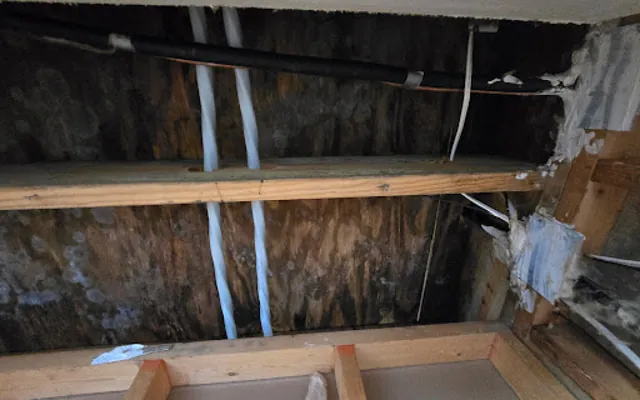
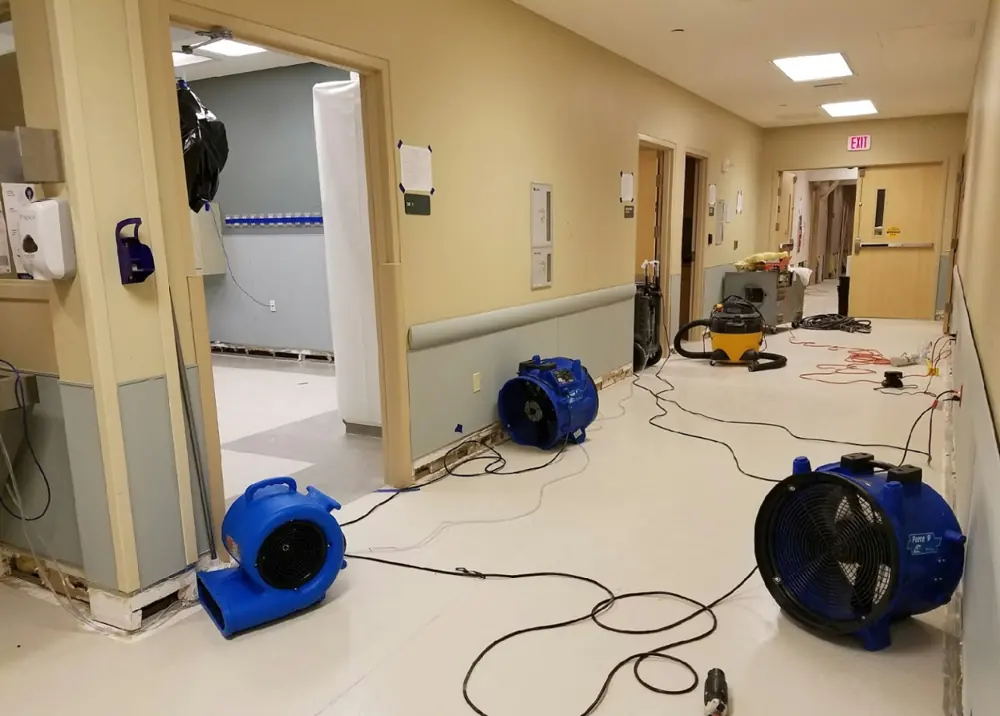
Hail and wind-driven rain open roofs across Aurora every storm season. Elite Guardian Mitigation is local, IICRC-standard, and on-site in about an hour to dry ceilings, walls, and attic framing before stains spread and mold takes hold.

Crews trace the water path with meters and infrared, contain active drips, and coordinate a tarp or emergency patch so drying can begin on a stopped leak.
Saturated insulation, sagging ceiling drywall, and unsalvageable trim are removed to expose the framing and open the cavity, so drying reaches every wet surface instead of trapping moisture behind finishes.
Air movers and dehumidifiers dry the rafters, ceiling framing, and wall tops, and moisture is logged daily until readings across the attic reach IICRC-safe targets.
Crews reinsulate the attic, rebuild the ceiling and walls, repaint the affected areas, and take final readings to confirm the attic and the rooms below are fully dry.

While help is on the way, these first steps, done only where it is safe, limit the damage and protect the insurance claim.
Shut the supply off at the source, or close the home's main valve if the source is not obvious. Stopping the flow limits the damage more than anything else.
Switch off electricity to the affected area, but only if the breaker can be reached without standing in or touching the water.
Get a crew dispatched right away. The sooner extraction and drying begin, the more flooring, drywall, and belongings can be saved.
Take photos and a short video of the water and the affected rooms before anything is moved, so the insurance claim starts strong.
Roof leak water damage cleanup in Aurora usually runs about $1,500 to $7,000, depending on how long water intruded, how much insulation and ceiling drywall is saturated, and whether multiple rooms are affected. A single stained ceiling sits low; attic-wide saturation runs higher. Storm and hail damage is often covered by homeowners insurance, and crews document everything and coordinate with your adjuster directly.
Crews reach Aurora and the south-metro Front Range fast, from Del Mar and Aurora Hills to Village East, Smoky Hill, Mission Viejo, and Tallyn's Reach. See the full list on the areas served across Aurora page.
See all areas servedEvery loss is photographed, measured, and logged from the first visit, so the paperwork holds up with your insurance carrier.
Technicians follow recognized IICRC drying standards and prove the work with daily moisture readings, not guesswork.
Emergency dispatch any hour of the day or night, with a real crew on the way, not a callback in the morning.
A real crew dispatched any hour, not a callback in the morning.
Trained technicians following recognized IICRC drying standards.
Truck-mounted, portable, and submersible for any size loss.
The loss is documented and billed to the carrier directly.
Yes. A dry-looking stain means water already reached the drywall and likely the insulation and framing above it. That moisture can linger for weeks and grow mold out of sight. Crews use meters and infrared to check what is wet behind the surface, then dry only what needs drying.
Crews handle the water damage inside, the drying, insulation removal, and rebuild. For the roof itself crews coordinate emergency tarping and work alongside your roofer so the leak is stopped before crews dry and restore. That sequence keeps you from paying to dry a ceiling that is still leaking.
Hail often bruises shingles and cracks their seals without punching an obvious hole. The roof looks fine from the ground, but the next wind-driven rain slips under the loosened shingles. That delay is why many Aurora homeowners do not connect a ceiling stain to a storm that passed weeks earlier.
Sudden storm and hail damage is usually covered by homeowners insurance, including the interior water damage it causes. Leaks from a worn-out roof or deferred maintenance may be excluded. Crews document the source, log moisture readings, and coordinate directly with your adjuster to support the claim.
Absolutely. Roof-mounted evaporative coolers are common in Aurora, and a rusted pan or failed supply line lets water run down through the ceiling exactly where a roof leak would show. Crews trace the true source so you repair the right thing instead of chasing shingles.
Aurora crews are on call 24 hours a day, local and fast, and can be on the way within the hour.
Call (720) 807-8182