When a hard Front Range freeze bursts a pipe, gallons can pour into your walls in minutes. Elite Guardian Mitigation reaches Aurora homes in about an hour, with IICRC-standard crews ready to extract, dry, and restore.

Crews help shut the main, locate the burst, and stop the flow. Then crews assess the affected areas and map moisture in walls, floors, and cavities before drying starts.
Truck-mounted and portable pumps remove standing water fast from floors, basements, and crawlspaces, and crews clear saturated materials that would otherwise trap moisture and slow drying.
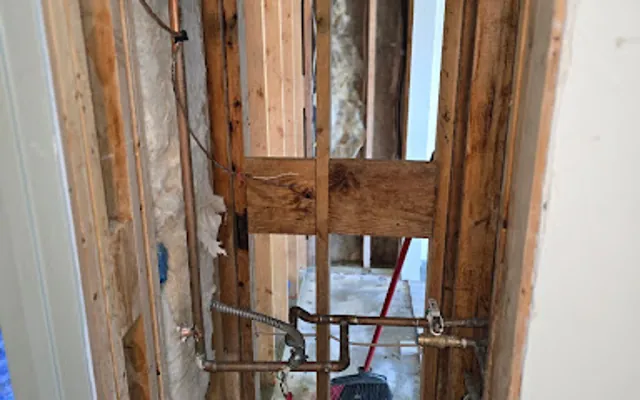
Crews open wet wall cavities where the pipe burst, position air movers and dehumidifiers, and monitor moisture daily until framing and surfaces meet IICRC dry standards.
After drying, crews rebuild drywall, insulation, and flooring, coordinate the pipe repair, and document everything for insurance so your home is whole and protected against the next freeze.

While help is on the way, these first steps, done only where it is safe, limit the damage and protect the insurance claim.
Shut the supply off at the source, or close the home's main valve if the source is not obvious. Stopping the flow limits the damage more than anything else.
Switch off electricity to the affected area, but only if the breaker can be reached without standing in or touching the water.
Get a crew dispatched right away. The sooner extraction and drying begin, the more flooring, drywall, and belongings can be saved.
Take photos and a short video of the water and the affected rooms before anything is moved, so the insurance claim starts strong.
A frozen pipe cleanup in Aurora usually runs $2,000 to $8,000, though a break that flooded a finished basement or ran for hours can cost more. The main factors are how much water escaped, how far it spread, and how much drywall, insulation, and flooring need replacing. Sudden burst-pipe damage is generally covered by homeowner's insurance, and crews bill your adjuster directly.
Crews reach Aurora and the south-metro Front Range fast, from Del Mar and Aurora Hills to Village East, Smoky Hill, Mission Viejo, and Tallyn's Reach. See the full list on the areas served across Aurora page.
See all areas servedEvery loss is photographed, measured, and logged from the first visit, so the paperwork holds up with your insurance carrier.
Technicians follow recognized IICRC drying standards and prove the work with daily moisture readings, not guesswork.
Emergency dispatch any hour of the day or night, with a real crew on the way, not a callback in the morning.
A real crew dispatched any hour, not a callback in the morning.
Trained technicians following recognized IICRC drying standards.
Truck-mounted, portable, and submersible for any size loss.
The loss is documented and billed to the carrier directly.
Shut off your main water valve right away to stop the flow, then cut power to any wet areas if you can do so safely. Move valuables out of the water and call. Crews answer around the clock and can be at your Aurora home in about an hour to extract and dry.
When water freezes, it expands and cracks the pipe, but the ice plug holds the water in place. As it thaws, the crack opens and water rushes out, often when no one is home to notice. That is why a freeze can turn into a major flood hours after the cold has passed.
Usually, yes. Sudden water damage from a burst pipe is a covered peril on most homeowner's policies. Insurers may expect you to have kept the home reasonably heated, so a pipe that froze in an unheated, vacant house can be questioned. Crews document the cause and damage thoroughly and bill your adjuster directly.
Insulate pipes in exterior walls, crawlspaces, garages, and along cold north-facing walls. On the coldest Aurora nights, let a faucet drip and open cabinet doors so warm air reaches the plumbing. Keep the heat on even when away, and know where your main shutoff is so you can act fast.
Aurora crews are on call 24 hours a day, local and fast, and can be on the way within the hour.
Call (720) 807-8182