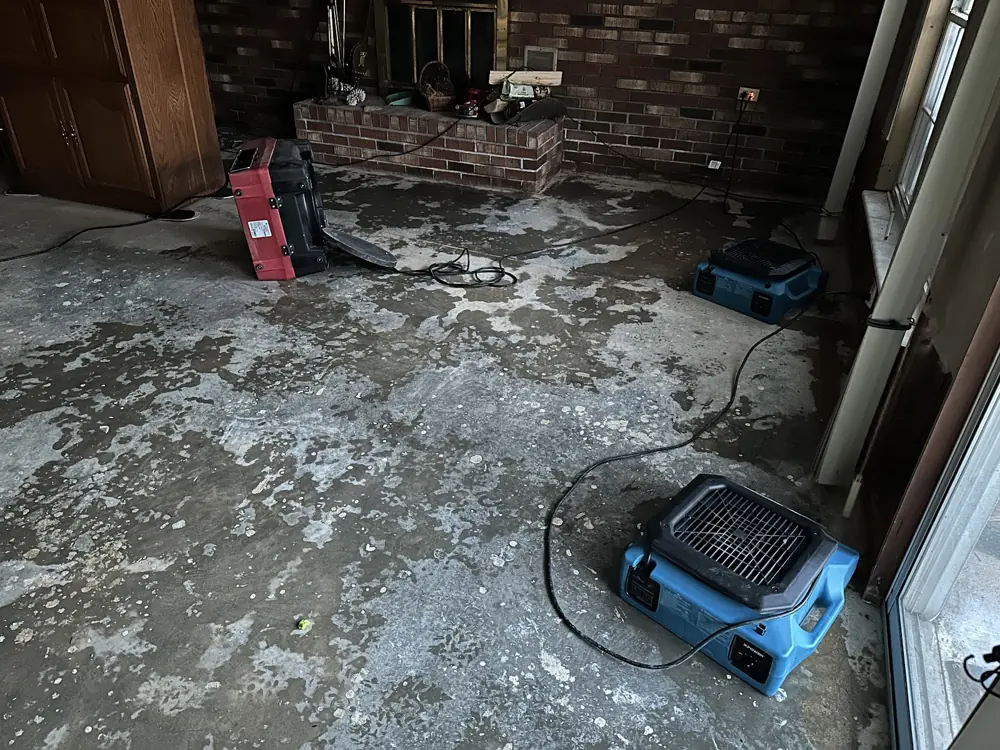
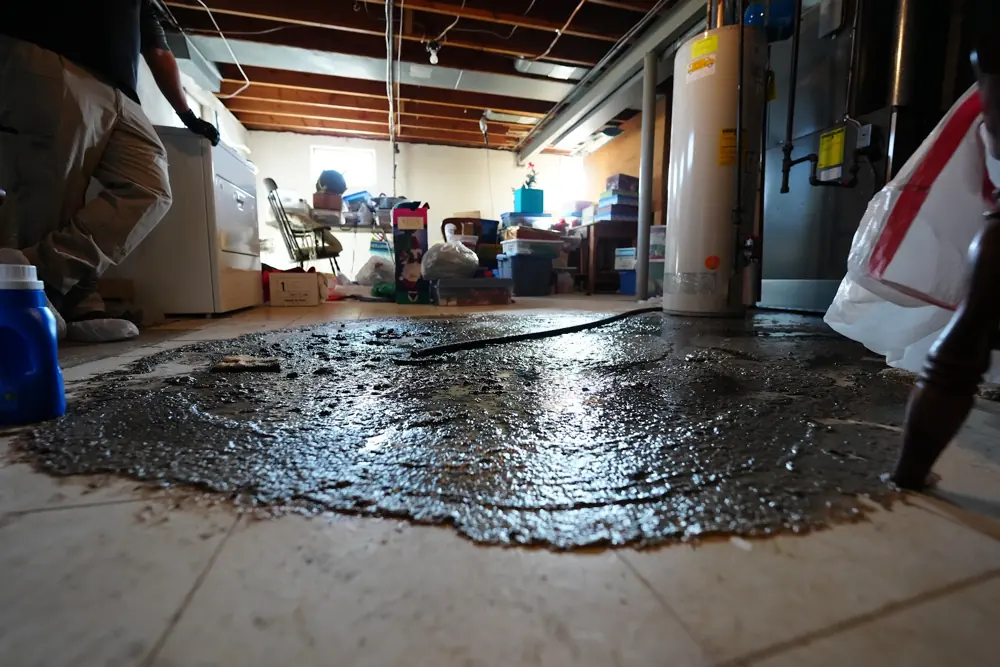
Water heaters, frozen garage pipes, and snowmelt running under the door all turn an Aurora garage into a water damage problem. Elite Guardian Mitigation answers 24/7, arrives in about an hour, and dries it with IICRC-standard local crews.

Crews identify the source, whether it is a failed water heater, a burst pipe, or runoff, then pull standing water off the slab and out of any finished areas fast.
Wet storage is moved and sorted, and saturated drywall on the shared wall is opened so trapped water does not migrate into the adjoining living space.
Air movers and dehumidifiers dry the slab, framing, and wall cavities, with moisture logged daily until the shared wall and any finished areas reach dry standard.
Crews rebuild damaged drywall and finishes and point out the failed water heater, pipe, or door seal so the same problem does not flood the garage again.

While help is on the way, these first steps, done only where it is safe, limit the damage and protect the insurance claim.
Shut the supply off at the source, or close the home's main valve if the source is not obvious. Stopping the flow limits the damage more than anything else.
Switch off electricity to the affected area, but only if the breaker can be reached without standing in or touching the water.
Get a crew dispatched right away. The sooner extraction and drying begin, the more flooring, drywall, and belongings can be saved.
Take photos and a short video of the water and the affected rooms before anything is moved, so the insurance claim starts strong.
Garage water damage cleanup in Aurora generally costs $1,000 to $6,500. What moves the number is the source, the amount of water on the slab, whether the shared wall and any finished space are involved, and how much drywall needs rebuilding. A sudden water heater failure or burst pipe is usually covered by insurance, and crews bill your carrier directly.
Crews reach Aurora and the south-metro Front Range fast, from Del Mar and Aurora Hills to Village East, Smoky Hill, Mission Viejo, and Tallyn's Reach. See the full list on the areas served across Aurora page.
See all areas servedEvery loss is photographed, measured, and logged from the first visit, so the paperwork holds up with your insurance carrier.
Technicians follow recognized IICRC drying standards and prove the work with daily moisture readings, not guesswork.
Emergency dispatch any hour of the day or night, with a real crew on the way, not a callback in the morning.
A real crew dispatched any hour, not a callback in the morning.
Trained technicians following recognized IICRC drying standards.
Truck-mounted, portable, and submersible for any size loss.
The loss is documented and billed to the carrier directly.
Often, yes. Even a bare slab garage shares a wall with your house, and water wicks into that drywall and framing and can reach the living space. Moisture also gets trapped under stored items and along the base of the walls. Drying it properly prevents mold and protects the rooms next door.
Attached garages are usually unheated, so pipes running through them or through the exterior walls sit unprotected during Aurora's hard winter freezes. When the temperature drops overnight, the water inside expands and can split the pipe. The leak often shows up as the pipe thaws, which is why insulation and heat tape matter.
Yes, and that is the main reason to act fast. The wall between an attached garage and the home is drywall over framing, and water wicks right up into it. From there moisture can move into the adjoining room's flooring and baseboards. Drying the shared wall quickly is what keeps the damage contained.
Usually, if the cause was sudden and accidental. Colorado homeowner policies typically cover a burst pipe or a failed water heater, including the resulting damage to the garage and shared wall. Water that seeps in from outside through the door or slab is treated differently. Crews document everything and bill your insurer directly.
Aurora crews are on call 24 hours a day, local and fast, and can be on the way within the hour.
Call (720) 807-8182