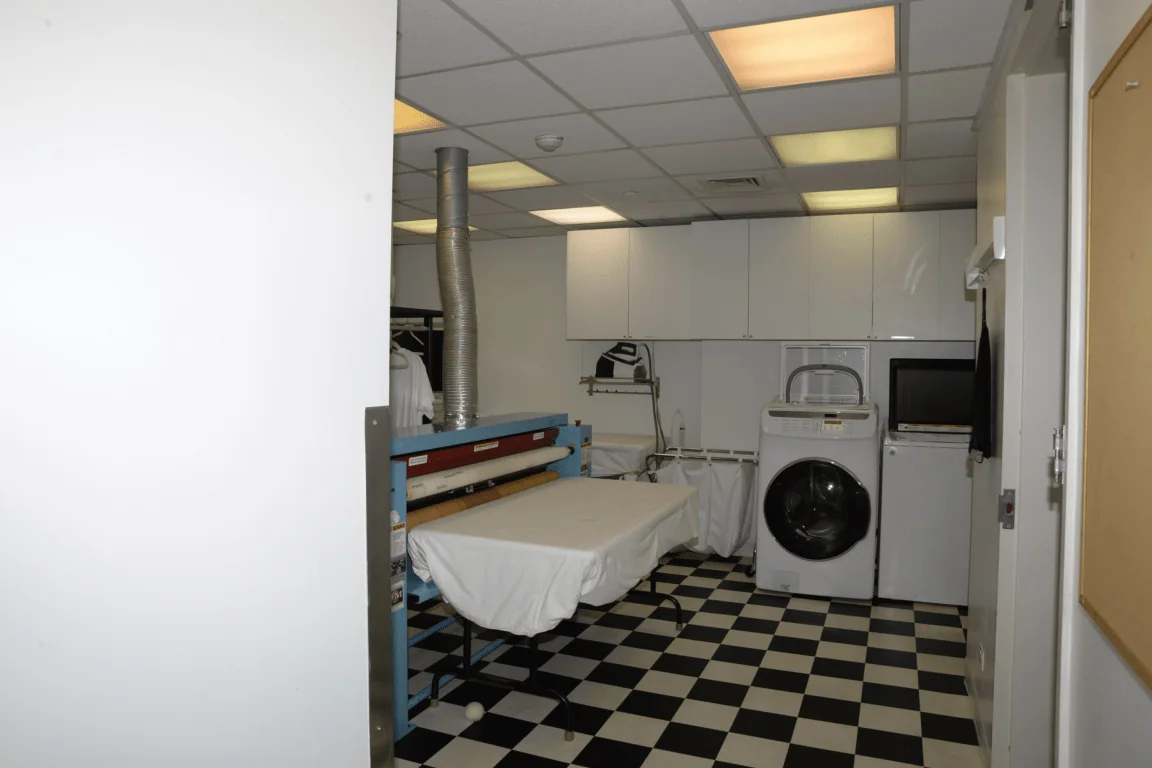
A burst hose or a stuck valve can pour hundreds of gallons across your laundry room. Elite Guardian Mitigation is Aurora-based, IICRC-standard, and on-site in about an hour to extract, dry, and stop the damage before it spreads.

Crews shut off the water to the washer, contain the spill, and map moisture across the laundry area, adjacent rooms, and any ceiling below an upstairs unit.
Portable and truck-mounted pumps remove pooled water from the slab or floor quickly, before it wicks deeper into baseboards, cabinets, subfloor, and any adjoining rooms.
Air movers and dehumidifiers dry the flooring, framing, and walls, and moisture is logged daily until every affected surface, including any ceiling below, reaches IICRC-safe targets.
Crews repair the damaged flooring, drywall, and trim, then take final moisture readings to confirm the laundry area and any room below are dry before crews finish the job.

While help is on the way, these first steps, done only where it is safe, limit the damage and protect the insurance claim.
Shut the supply off at the source, or close the home's main valve if the source is not obvious. Stopping the flow limits the damage more than anything else.
Switch off electricity to the affected area, but only if the breaker can be reached without standing in or touching the water.
Get a crew dispatched right away. The sooner extraction and drying begin, the more flooring, drywall, and belongings can be saved.
Take photos and a short video of the water and the affected rooms before anything is moved, so the insurance claim starts strong.
Washing machine overflow cleanup in Aurora generally runs about $1,200 to $5,000, driven by how long the water ran, how far it spread, and whether a finished basement or a ceiling below an upstairs laundry was affected. A quick, contained spill sits low; a hose that burst for hours runs higher. Sudden overflows are usually covered by homeowners insurance, and crews document and bill your adjuster directly.
Crews reach Aurora and the south-metro Front Range fast, from Del Mar and Aurora Hills to Village East, Smoky Hill, Mission Viejo, and Tallyn's Reach. See the full list on the areas served across Aurora page.
See all areas servedEvery loss is photographed, measured, and logged from the first visit, so the paperwork holds up with your insurance carrier.
Technicians follow recognized IICRC drying standards and prove the work with daily moisture readings, not guesswork.
Emergency dispatch any hour of the day or night, with a real crew on the way, not a callback in the morning.
A real crew dispatched any hour, not a callback in the morning.
Trained technicians following recognized IICRC drying standards.
Truck-mounted, portable, and submersible for any size loss.
The loss is documented and billed to the carrier directly.
A lot. A burst supply hose runs at full line pressure and can put out hundreds of gallons an hour until someone shuts the valve. If it happens while you are away, the volume is what makes these jobs serious. That is why fast extraction and drying matter so much once you find it.
It is worth it. Rubber hoses weaken with age and Aurora's hard water, and even braided lines fail eventually. Replacing them every few years and closing the valves when you travel are cheap ways to avoid a flood. Crews will point out the condition of your hookups while crews are on-site.
Not always. If crews dry the cavity quickly, some ceilings survive. When drywall is saturated, stained, or sagging, crews remove and replace that section. Crews take moisture readings inside the ceiling to make the call, then document the reasoning for your insurance file.
Sudden, accidental overflows such as a burst hose or a stuck valve are usually covered by homeowners insurance. Damage from a long-neglected slow leak may be excluded. Crews photograph the source, log moisture readings, and coordinate directly with your adjuster to support the claim.
Yes, if they sit on an exterior wall or in an unheated space. Hard Front Range freezes can crack the line or fitting, and it leaks the moment water flows again. Keeping the space above freezing and insulating exposed lines helps prevent a winter overflow.
Aurora crews are on call 24 hours a day, local and fast, and can be on the way within the hour.
Call (720) 807-8182