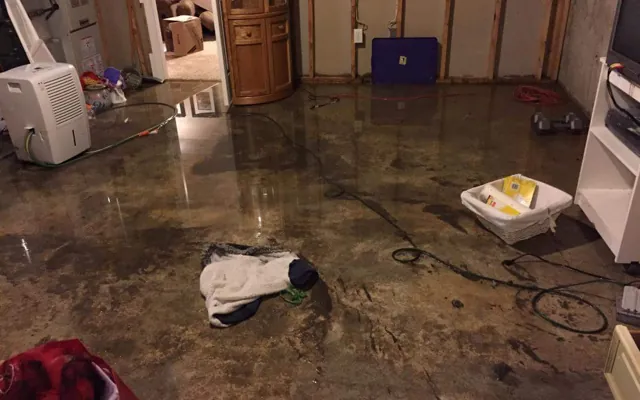
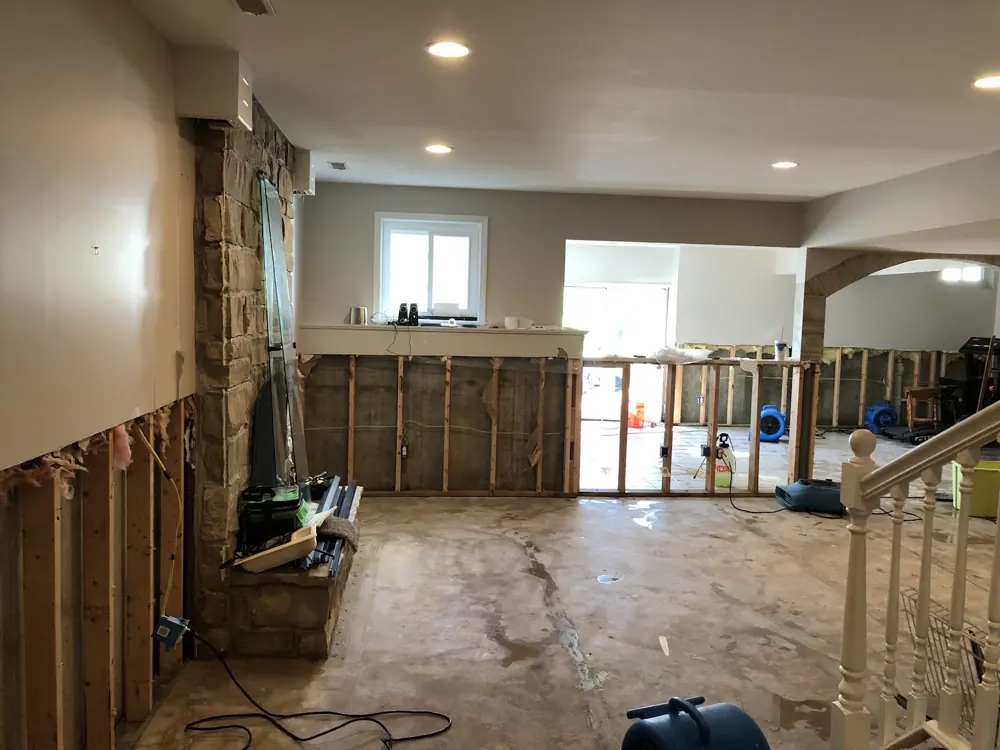
A failed water heater can dump forty gallons across a garage or utility room fast. Elite Guardian Mitigation is Aurora-based, IICRC-standard, and on-site in about an hour to extract, dry, and protect your floors and walls.

Crews close the water and gas or power to the unit, then use meters and cameras to trace how far the leak traveled into walls, flooring, and adjacent rooms.
Truck-mounted and portable pumps remove pooled water from the utility area, garage slab, or basement corner quickly, before it wicks deeper into drywall, baseboards, and any adjoining finished rooms.
Air movers and dehumidifiers dry the framing, drywall, and subfloor, and moisture readings are logged daily until every affected surface reaches IICRC-safe targets throughout the utility area.
Crews restore the damaged drywall, trim, and flooring, and tell you plainly whether the tank needs replacement so the same failure does not happen again next season.

While help is on the way, these first steps, done only where it is safe, limit the damage and protect the insurance claim.
Shut the supply off at the source, or close the home's main valve if the source is not obvious. Stopping the flow limits the damage more than anything else.
Switch off electricity to the affected area, but only if the breaker can be reached without standing in or touching the water.
Get a crew dispatched right away. The sooner extraction and drying begin, the more flooring, drywall, and belongings can be saved.
Take photos and a short video of the water and the affected rooms before anything is moved, so the insurance claim starts strong.
Water heater leak cleanup in Aurora generally costs about $1,500 to $6,000, driven by how long the tank leaked, how far water spread, and whether finished rooms or subfloor were involved. A slow drip caught early sits low; a full tank rupture into a finished basement runs higher. Sudden failures are usually covered by homeowners insurance, and crews document and bill your adjuster directly.
Crews reach Aurora and the south-metro Front Range fast, from Del Mar and Aurora Hills to Village East, Smoky Hill, Mission Viejo, and Tallyn's Reach. See the full list on the areas served across Aurora page.
See all areas servedEvery loss is photographed, measured, and logged from the first visit, so the paperwork holds up with your insurance carrier.
Technicians follow recognized IICRC drying standards and prove the work with daily moisture readings, not guesswork.
Emergency dispatch any hour of the day or night, with a real crew on the way, not a callback in the morning.
A real crew dispatched any hour, not a callback in the morning.
Trained technicians following recognized IICRC drying standards.
Truck-mounted, portable, and submersible for any size loss.
The loss is documented and billed to the carrier directly.
A small drip can mean a failing valve or early tank corrosion, and it rarely gets better on its own. Even a slow leak soaks drywall and subfloor over days. Shut off the water to the unit, then call. Catching it early keeps the cleanup small and inexpensive.
Crews are local and run 24/7, so crews usually reach Aurora, Centennial, and Englewood homes in about an hour. Water heaters sit on concrete and spread water fast, so a quick extraction often saves flooring and drywall that would otherwise have to be torn out.
The focus is water extraction, drying, and repairing the damage the leak caused. Crews will tell you plainly whether the tank has failed and needs replacing, and crews can coordinate timing with your plumber so the new unit goes in on dry, clean flooring.
Sudden, accidental failures like a burst tank or cracked line are usually covered by homeowners insurance. Gradual leaks from long-neglected corrosion may be excluded. Crews photograph the source, log moisture readings, and work directly with your adjuster to give the claim the best support.
Yes. Aurora garages and utility spaces get cold during hard freezes, and the supply lines feeding the heater can crack even if the tank survives. A cracked line drips steadily once water flows again. Insulating exposed lines and keeping the space above freezing helps prevent it.
Aurora crews are on call 24 hours a day, local and fast, and can be on the way within the hour.
Call (720) 807-8182