A hard freeze-thaw cycle in late winter adds one more round of stress to the bentonite clay under your Centennial home, and that is often when a pipe already weakened by soil movement finally gives out. The IICRC-standard crew extracts fast once it does.

Crews check for soil-related stress signs alongside sprinkler lines and finished-basement plumbing, since more than one of these can be involved in a single water loss out here.
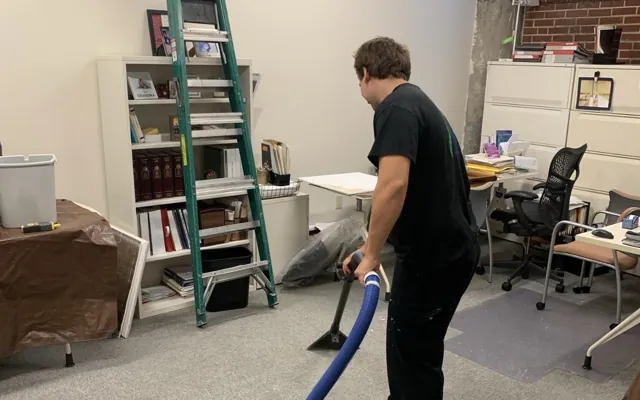
Pumps and wet vacuums clear standing water from the affected slab or basement level, working quickly regardless of which combination of causes is involved in this particular home.
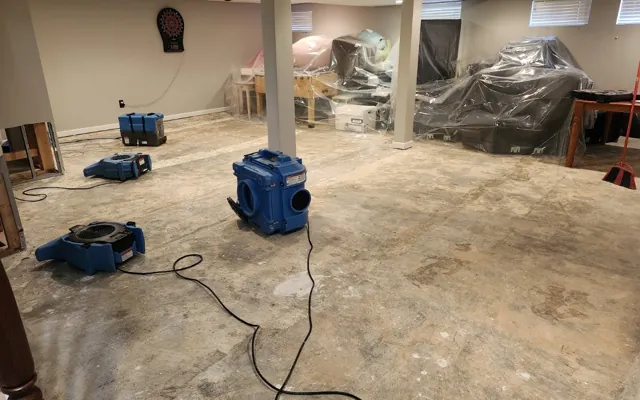
Air movers and dehumidifiers dry the framing and subfloor until daily readings confirm a stable, dry condition, with full documentation for the homeowner's insurance claim, whichever combination of causes applied here.

Emergency water extraction in Centennial usually runs $1,200 to $5,500, driven by how much water is standing, how far it spread into finished space, and how long it sat before removal. Crawlspace and slab jobs on expansive soil can push the range higher. Sudden losses like burst pipes and storm surges are typically covered by homeowner insurance, and crews document the loss and coordinate your claim.
Centennial is one of the largest suburbs in the area, built out almost entirely between the 1970s and 2000s with mile after mile of two-story subdivisions sitting on expansive bentonite clay. That soil movement is a quiet driver behind a lot of slab cracking and pipe stress across the suburb, on top of the usual finished-basement and sprinkler-line risks common to newer construction. Expansive bentonite clay under mile after mile of Centennial's subdivisions creates steady soil movement that stresses slabs and pipes over time, adding a quiet background risk on top of the finished-basement and sprinkler-line causes already common in newer construction here. From Centennial, crews also cover nearby Mission Viejo, Lakeshore, Dam East-West, Heather Gardens, East Ridge-Ptarmigan Park, Heather Ridge. See every neighborhood and town on the full service area page.
See all areas servedEvery loss is photographed, measured, and logged from the first visit, so the paperwork holds up with your insurance carrier.
Technicians follow recognized IICRC drying standards and prove the work with daily moisture readings, not guesswork.
Emergency dispatch any hour of the day or night, with a real crew on the way, not a callback in the morning.
A real crew dispatched any hour, not a callback in the morning.
Trained technicians following recognized IICRC drying standards.
Truck-mounted, portable, and submersible for any size loss.
The loss is documented and billed to the carrier directly.
Crews dispatch IICRC-standard crews to Centennial, CO and surrounding Aurora neighborhoods within one to two hours of your emergency call. Fast response is absolutely critical because water spread and mold growth happen very quickly in burst pipe situations, particularly in crawlspaces and basements where moisture hides behind framing materials. Every hour of delay increases water spread.
Typical drying in Centennial, CO homes runs three to five days with continuous dehumidifiers and air movers operating around the clock. Crews take daily moisture readings to verify all structural materials including rim joists, framing, and subfloors meet industry dry standards before equipment comes down.
Crews are on call 24 hours a day and can be on the way to Centennial within the hour.
Call (720) 807-8182